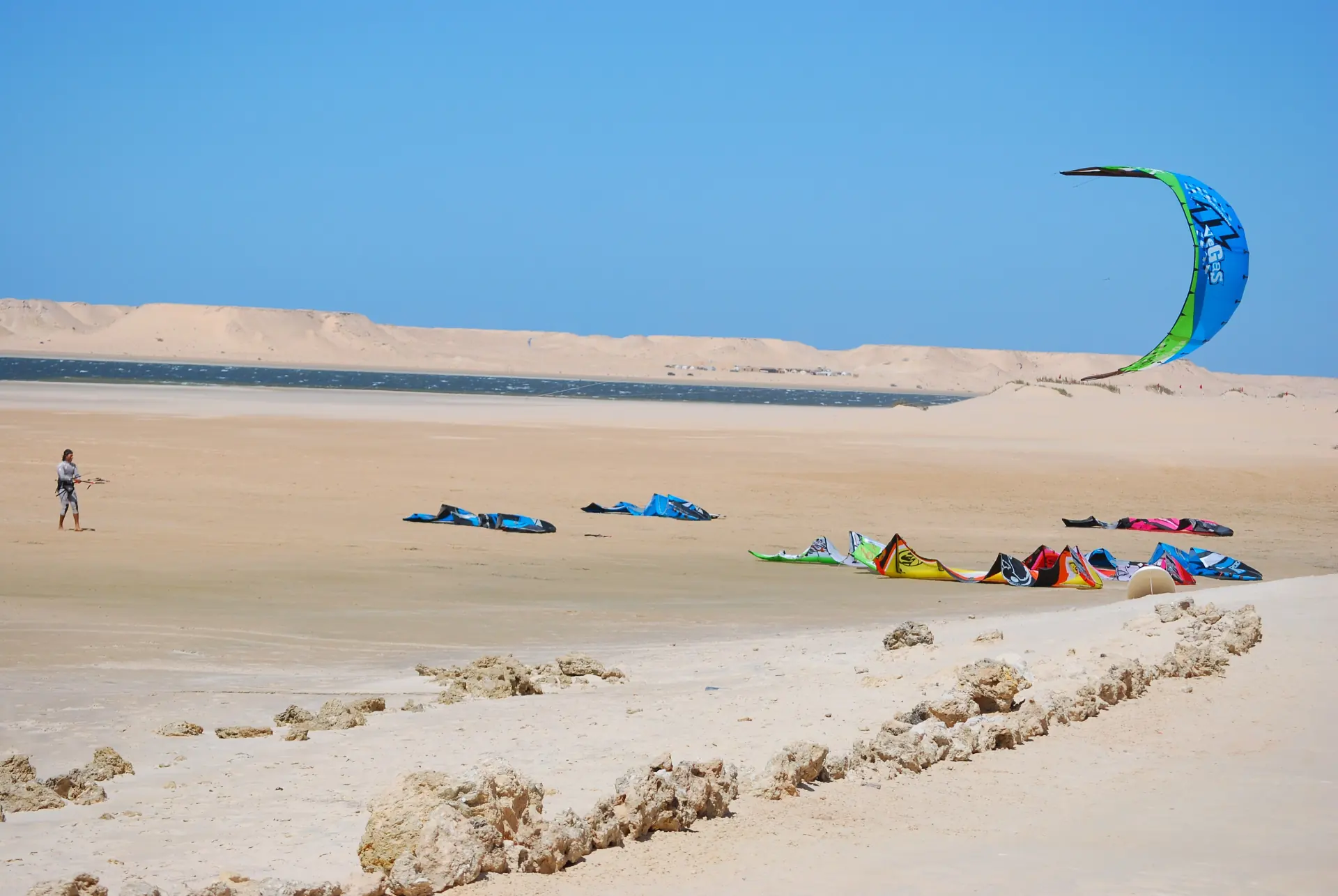
© Nomadz · CC BY-SA 3.0
What size kite for this wind?
Weight, wind and board in, size out.
Rule of thumb: kite size (m²) ≈ weight (kg) ÷ wind (knots) × 2.2. 75 kg in 15 knots: about 11 m².
Kite size chart.
| kg | 10 kn | 12 kn | 15 kn | 20 kn | 25 kn |
|---|---|---|---|---|---|
| 50 | 10–12 | 8–10 | 6–8 | 5–6 | 4–5 |
| 60 | 12–15 | 10–12 | 8–10 | 6–8 | 4–6 |
| 70 | 14–17 | 11–14 | 9–12 | 7–9 | 5–7 |
| 80 | – | 13–16 | 10–13 | 8–10 | 6–8 |
| 90 | – | 15–17 | 12–15 | 9–11 | 7–9 |
| 100 | – | – | 13–16 | 10–12 | 8–10 |
Kite size in m², tube kite on a twin-tip.
Kite size on a hydrofoil
| kg | 6 kn | 8 kn | 10 kn | 12 kn | 15 kn | 18 kn | 22 kn |
|---|---|---|---|---|---|---|---|
| 50 | 10–13 | 8–10 | 6–8 | 5–7 | 4–6 | 3–5 | 3–4 |
| 60 | – | 9–12 | 7–10 | 6–8 | 5–7 | 4–6 | 3–5 |
| 70 | – | 11–14 | 9–11 | 7–10 | 6–8 | 5–7 | 4–5 |
| 80 | – | 13–16 | 10–13 | 8–11 | 7–9 | 5–7 | 4–6 |
| 90 | – | 14–17 | 11–14 | 9–12 | 7–10 | 6–8 | 5–7 |
| 100 | – | – | 13–16 | 10–13 | 8–11 | 7–9 | 5–8 |
| 110 | – | – | 14–17 | 12–15 | 9–12 | 8–10 | 6–8 |
Kite size in m².
Ram-air foil kites: the foil kite calculator.
Knots, Beaufort and km/h
Kiters talk knots, the forecast talks Beaufort, your car talks km/h. One knot is 1.852 km/h or 0.514 m/s.
| Beaufort | Name | Knots | km/h | m/s | For kiting |
|---|---|---|---|---|---|
| 0 Bft | Calm | 0–1 | 0–3 | 0.0–0.8 | Too little to kite |
| 1 Bft | Light air | 1–3 | 1–6 | 0.3–1.8 | Too little to kite |
| 2 Bft | Light breeze | 4–6 | 6–12 | 1.8–3.3 | Too little to kite |
| 3 Bft | Gentle breeze | 7–10 | 12–19 | 3.3–5.4 | At 75 kg: hydrofoil 11–14 m² |
| 4 Bft | Moderate breeze | 11–16 | 19–31 | 5.4–8.5 | At 75 kg: twin-tip 11–14 m², hydrofoil 7–9 m² |
| 5 Bft | Fresh breeze | 17–21 | 31–40 | 8.5–11.1 | At 75 kg: twin-tip 7–10 m², hydrofoil 5–7 m² |
| 6 Bft | Strong breeze | 22–27 | 40–51 | 11.1–14.1 | At 75 kg: twin-tip 6–8 m², hydrofoil 4–5 m² |
| 7 Bft | Near gale | 28–33 | 51–62 | 14.1–17.2 | At 75 kg: twin-tip 4–6 m², hydrofoil 3–4 m², experienced riders only |
| 8 Bft | Gale | 34–40 | 62–75 | 17.2–20.8 | Don’t kite |
| 9 Bft | Strong gale | 41–47 | 75–88 | 20.8–24.4 | Don’t kite |
| 10 Bft | Storm | 48–55 | 88–103 | 24.4–28.6 | Don’t kite |
| 11 Bft | Violent storm | 56–63 | 103–118 | 28.6–32.7 | Don’t kite |
| 12 Bft | Hurricane | 64+ | 119+ | 32.9+ | Don’t kite |
Band limits per the WMO/KNMI scale, rounded. Kite sizes from the rule of thumb below, intermediate level.
How we calculate
- Rule of thumb: kite size (m²) ≈ weight (kg) ÷ wind (knots) × 2.2, for a tube (LEI) kite on a twin-tip. 75 kg in 15 knots gives 11 m².
- Board: surfboard ×1.07, hydrofoil ×0.65 (a foil lifts out in far less wind).
- Ram-air foil kite: ×0.8: it pulls more per m² than a tube kite, riders fly it 1–2 m smaller.
- Level: beginners shift to the small end, nothing over 14 m. Always a range, rounded to whole m².
- The rule is linear and works best between 12 and 25 knots. Kites differ by model: the maker’s wind range comes first. Gusty? Pick the small end.
Founder pre-order
Track what you just rode.
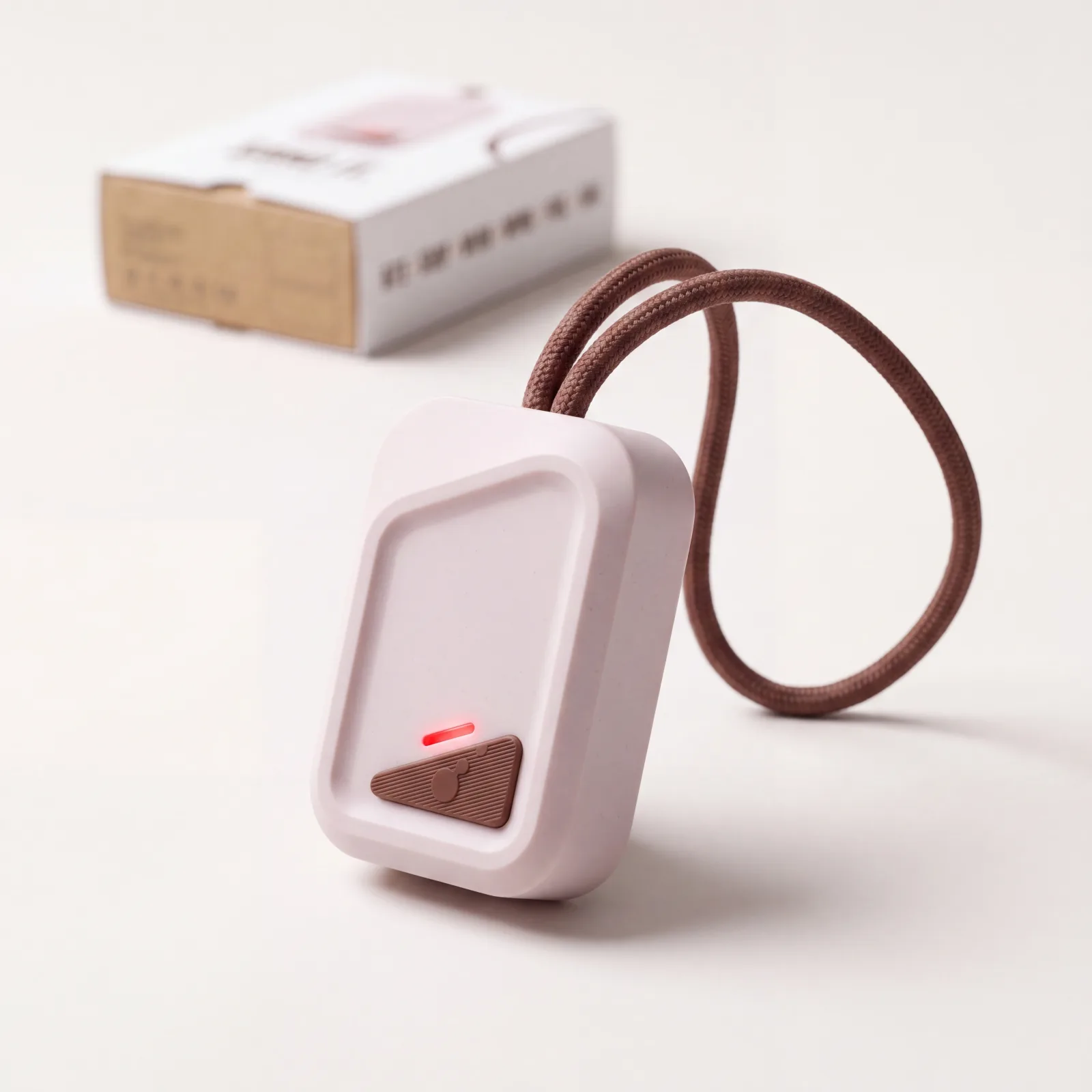
Waterproof GPS sensor for kite and wing. €6,99 a month for founders, sensor included.
FAQ
Common questions
What size kite do I need for the wind?
Weight (kg) ÷ wind (knots) × 2.2. For 75 kg: about 14 m² in 12 knots, 11 m² in 15 knots and 8 m² in 20 knots.
How many knots is Beaufort 4?
Force 4 is 11 to 16 knots, roughly 20 to 30 km/h: twin-tip wind for an 11 to 14 m² kite at 75 kg.
Which kites should be in my quiver?
Two or three kites about 3 to 4 m² apart, for example 14, 10 and 7 m² at 75 kg.
What kite size for a beginner?
The small end of the range, and start at a school. Above 20 knots, don’t go out on your own.
More from SANDIT