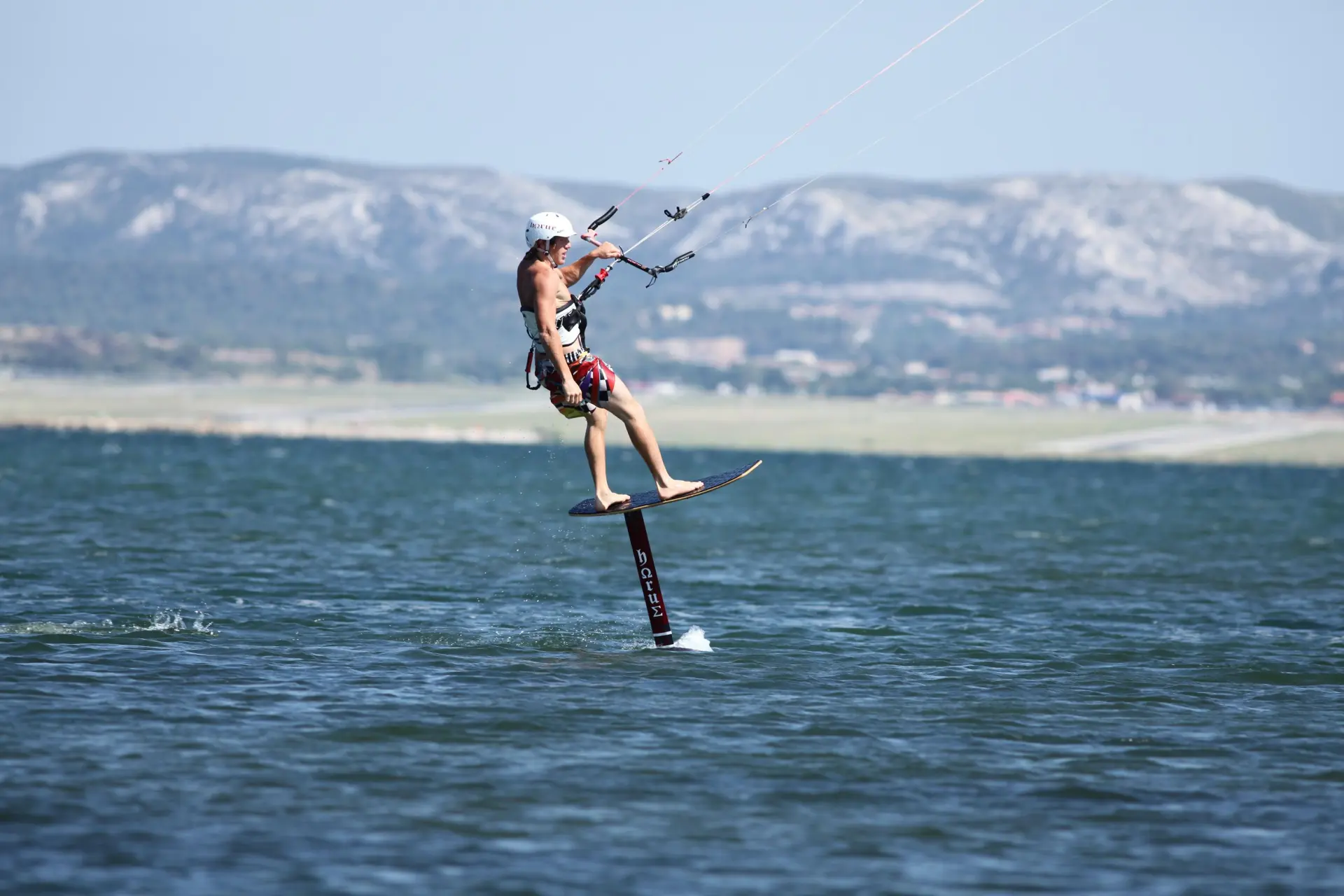
© Horue · CC BY-SA 3.0
What kite for foiling?
A tube kite on a foil, or a ram-air foil kite.
Tube kite on a hydrofoil: weight ÷ wind × 1.43. Ram-air foil kite: × 0.8 on top. 75 kg in 12 knots: about a 9 m² tube kite or a 7 m² ram-air.
Foil kite size chart.
| kg | 8 kn | 10 kn | 12 kn | 15 kn | 20 kn |
|---|---|---|---|---|---|
| 50 | 8–10 | 6–8 | 5–7 | 4–6 | 3–4 |
| 60 | 9–12 | 7–10 | 6–8 | 5–7 | 3–5 |
| 70 | 11–14 | 9–11 | 7–10 | 6–8 | 4–6 |
| 80 | 13–16 | 10–13 | 8–11 | 7–9 | 5–7 |
| 90 | 14–17 | 11–14 | 9–12 | 7–10 | 5–7 |
| 100 | – | 13–16 | 10–13 | 8–11 | 6–8 |
Kite size in m², tube kite on a hydrofoil.
Tube kite or ram-air: the difference
- A · Tube kite on a hydrofoil: your normal LEI kite with a foil board. Count on 2 to 4 m² less than on your twin-tip; rides from about 7 knots at 75 kg. Easy to relaunch.
- B · Ram-air foil kite: a kite without tubes (Flysurfer Soul or Sonic type). It pulls more per m², so 1 to 2 m smaller. Light and efficient, but harder to relaunch from the water.
- Safety: helmet and impact vest, learn with a school or an experienced friend, and check the foil zone on the signs.
Ram-air foil kite size chart
| kg | 6 kn | 8 kn | 10 kn | 12 kn | 15 kn | 18 kn | 22 kn |
|---|---|---|---|---|---|---|---|
| 50 | 8–11 | 6–8 | 5–7 | 4–6 | 3–5 | 2–4 | 2–3 |
| 60 | 10–13 | 7–10 | 6–8 | 5–7 | 4–5 | 3–5 | 2–4 |
| 70 | 12–15 | 9–11 | 7–9 | 6–8 | 4–6 | 4–5 | 3–4 |
| 80 | 14–17 | 10–13 | 8–10 | 7–9 | 5–7 | 4–6 | 3–5 |
| 90 | 15–19 | 11–14 | 9–12 | 7–10 | 6–8 | 5–7 | 4–6 |
| 100 | 17–21 | 13–16 | 10–13 | 8–11 | 7–9 | 5–7 | 4–6 |
| 110 | – | 14–17 | 11–14 | 9–12 | 7–10 | 6–8 | 5–7 |
Kite size in m², closed-cell foil kite. Single-skin and open-cell kites differ a lot by model.
How we calculate
- Rule of thumb: kite size (m²) ≈ weight (kg) ÷ wind (knots) × 2.2, for a tube (LEI) kite on a twin-tip. 75 kg in 15 knots gives 11 m².
- Board: surfboard ×1.07, hydrofoil ×0.65 (a foil lifts out in far less wind).
- Ram-air foil kite: ×0.8: it pulls more per m² than a tube kite, riders fly it 1–2 m smaller.
- Level: beginners shift to the small end, nothing over 14 m. Always a range, rounded to whole m².
- The rule is linear and works best between 12 and 25 knots. Kites differ by model: the maker’s wind range comes first. Gusty? Pick the small end.
Founder pre-order
Track what you just rode.
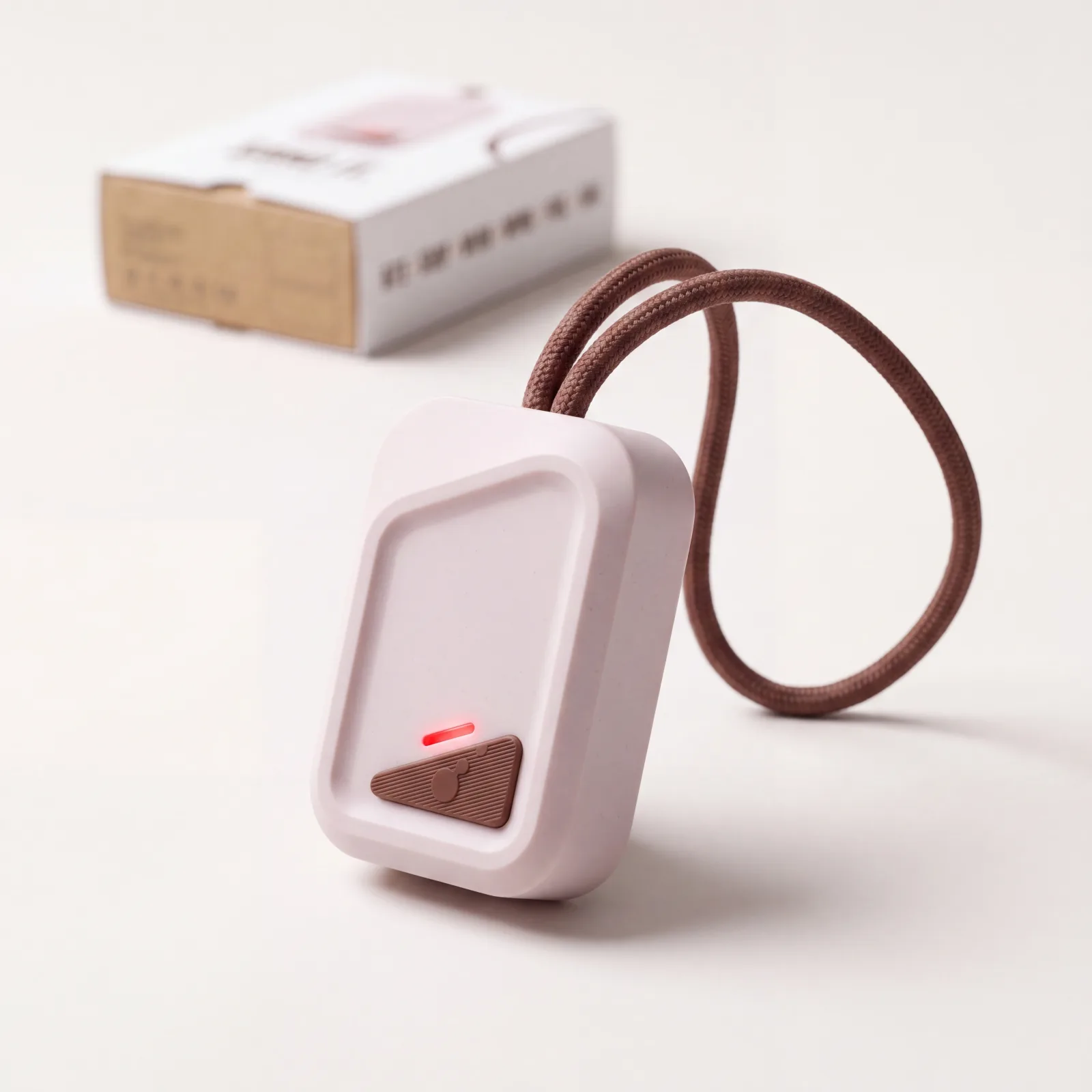
Waterproof GPS sensor for kite and wing. €6,99 a month for founders, sensor included.
FAQ
Common questions
What size kite do I need for kitefoiling?
With a tube kite, 2 to 4 m² less than on a twin-tip. At 75 kg: about 9 m² in 12 knots and 7 m² in 15 knots.
What is the difference between a foil kite and a tube kite?
A tube kite holds its shape with inflated tubes; a ram-air foil kite with cells that fill with air. The foil kite pulls more per m² but is harder to relaunch.
How much smaller is a ram-air foil kite?
Roughly 20 %: a 9 m² closed-cell foil kite pulls about like an 11 m² tube kite.
How many knots do I need to foil?
With a tube kite from about 7 knots at 75 kg, with a big ram-air from 5 to 6 knots.
More from SANDIT
Keep reading
Sources · Last checked November 2026
- Seabreeze forum: the weight ÷ wind × 2.2 rule of thumb
- Surf Store: kite size chart (same formula, 75 kg in 15 kn ≈ 11 m²)
- Duotone Diversity Magazine: foil kites make more power per m² than tube kites
- Flysurfer: SOUL, a closed-cell foil kite for twin-tip and hydrofoil
- Seabreeze forum: ram-air kite advice (foil 1–2 m smaller than an LEI)
- KNMI: wind force and the Beaufort scale (Dutch)