Wingfoiling
How fast is wingfoiling?
Speeds by level, the 33.55-knot record, and how to track your own.
Last checked: October 2026
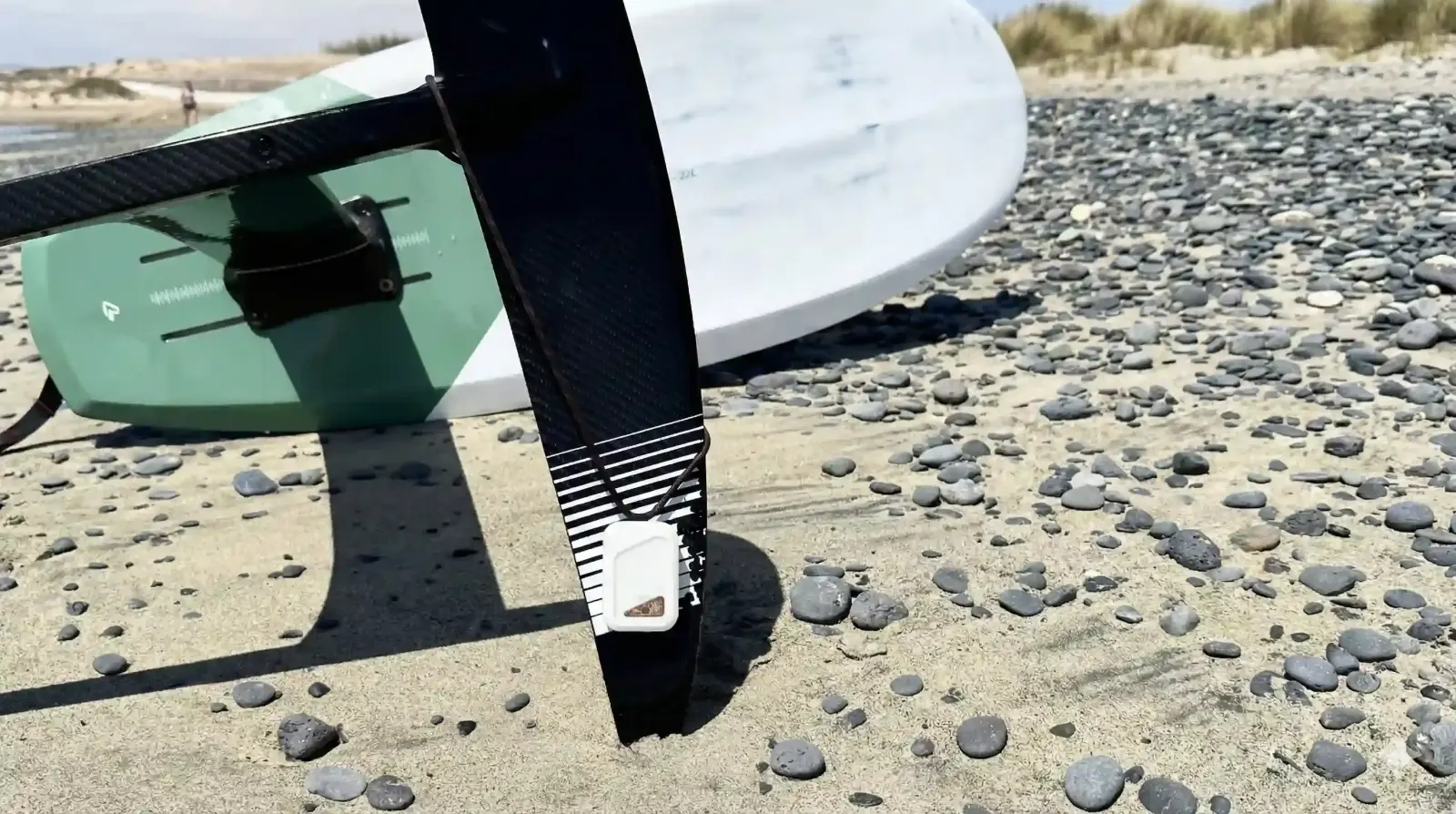
Speed by level.
Everyday speeds are rider-reported GPS numbers, not official statistics. The record is ratified.
Foil lifts off · board speed
5–6 kn · 9–11 km/h
Beginner · cruising
6–10 kn · 11–19 km/h
Intermediate · session average
11–13 kn · 20–24 km/h
Freeride · short peaks
20–27 kn · 37–50 km/h
Race foils · peaks
30+ kn · 56+ km/h
World record · 500 m
33.55 kn · 62.1 km/h
One knot is 1.852 km/h. Most riders think in knots, because wind forecasts do.
The record book.
The WSSRC ratifies wingfoil records over 500 m and a nautical mile. All were set at La Palme, France.
33.55kn
Outright 500 m · Alessandro Tomasi, 2024
30.37kn
Outright nautical mile · Tomasi, 2024
31.00kn
Women’s 500 m · Audrey Marie-Agnès, 2025
29.40kn
Women’s nautical mile · Marie-Agnès, 2025
Peaks run higher: Sroka cites 37.89 kn over a single second, on an Olympic kite-racing foil.
What makes you faster.
The front wing is the biggest lever. After that: wing, wind, water, setup and technique.
Front wing
Smaller, higher-aspect wings keep accelerating where big ones stall out.
Wing
A stiff wing you can hold sheeted in gives more usable power.
Steady wind
Steady wind lets you hold a fast line. Gusts force you to depower.
Flat water
Flat water is fast water. Records are set on lagoons.
Setup
Mast, shims, foil position and straps change how the foil flies.
Technique
Weight forward, steady front-foot pressure, the wing locked in place.
Compare like with like.
Speed rankings such as GPS-Speedsurfing split every number by the window it was measured over.
- 2-second peak. The bragging number, and the most prone to GPS glitches.
- 10-second and 500 m averages. How fast you really ride.
- Nautical mile and one hour. The longest windows on the rankings.
- Before you launch. Give the GPS a few minutes of open sky.
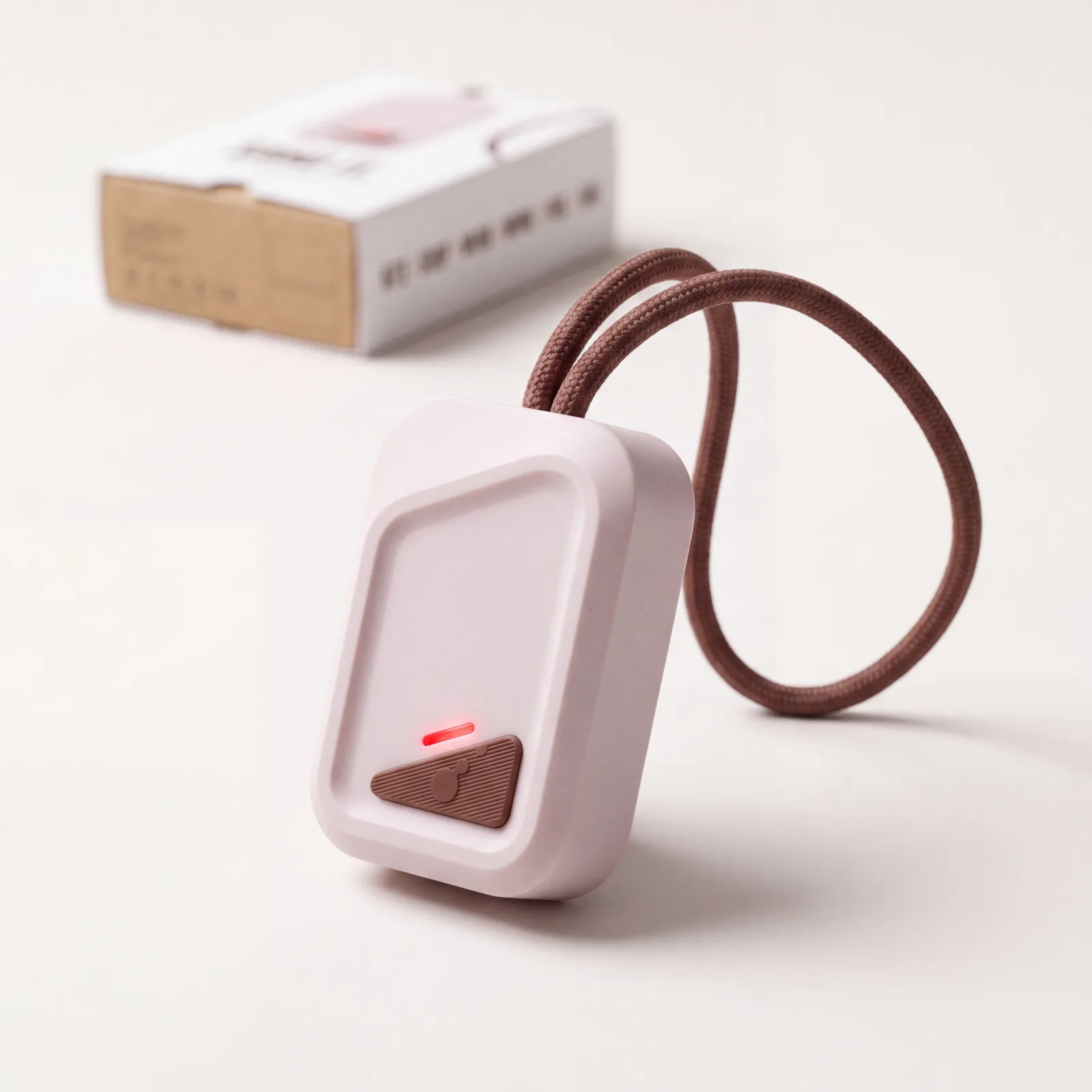
SANDIT Sensor
Top speed is fun. Progress lives elsewhere.
Time on the foil and completed jibes say more about how you ride.
- Lift percentage: your time on the foil
- Jibe success rate
- Speed, distance, session time and route
- Your phone stays on the beach
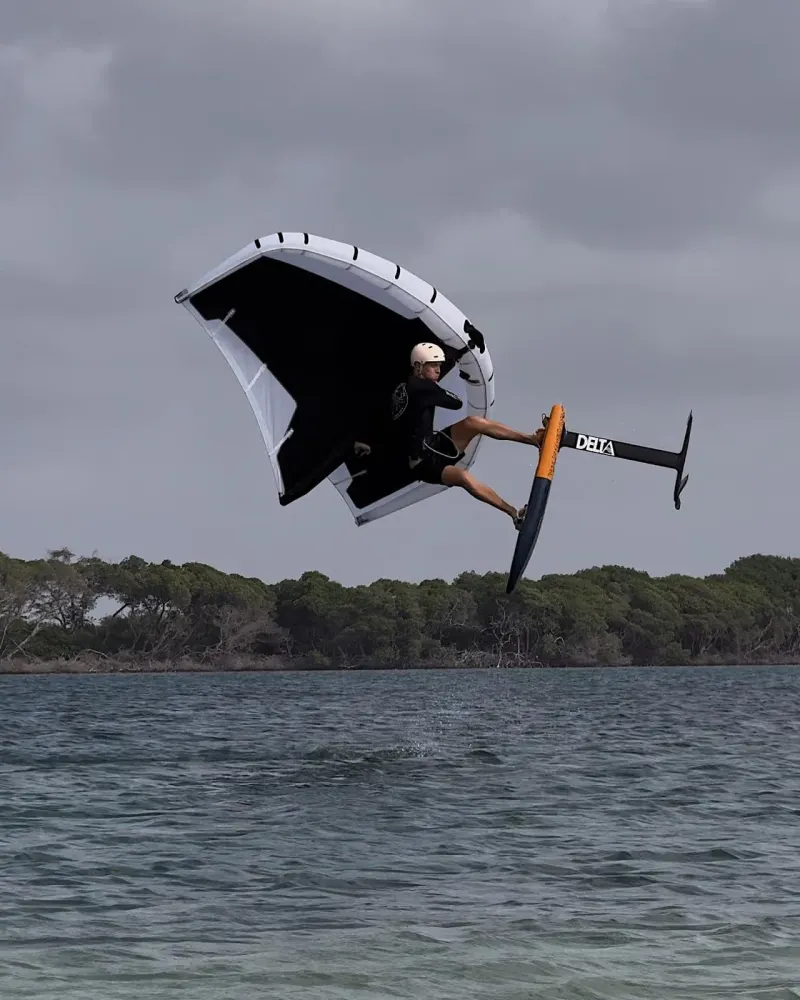
Know your numbers. Keep your phone dry.
€6,99 a month for founders, sensor included. Nothing to pay until it ships.
Questions
How fast do wingfoilers go?
Once up on the foil, many experienced recreational riders average around 11 to 13 knots (20 to 24 km/h) over a session, with short peaks of 20 to 27 knots on freeride gear. Racers on small, high-aspect foils pass 30 knots.
What is the wingfoil speed record?
The ratified outright record over 500 metres is 33.55 knots (about 62 km/h), set by Alessandro Tomasi at La Palme, France, on 1 July 2024. The women’s 500 m record is 31.00 knots, by Audrey Marie-Agnès in 2025.
Is wingfoiling faster than kitesurfing?
Not at the top end. The kitesurf speed record is 57.97 knots, set by Alex Caizergues in 2017. Wingfoiling is about efficiency: the foil lets you fly in light wind, and a hand-held wing limits the power you can hold.
Should I measure wingfoil speed in knots or km/h?
Either works, as long as you stay consistent. One knot is 1.852 km/h. Most riders use knots because watersport wind forecasts do, which makes it easy to compare board speed with wind speed.
Sources · Last checked October 2026
- World Sailing Speed Record Council: wingfoil records
- WSSR newsletter: new records at La Palme 2025
- Sroka: How to go faster in wingfoil (37.89 kn one-second peak, speed factors)
- 48° North: New craze, wing foiling (5–6 knots to get the foil working)
- Progression Project forum: rider-reported wingfoil speeds and gear
- Wikipedia: Kiteboarding (kitesurf speed record, 57.97 kn)
- GPS-Speedsurfing: speed rankings, including wingfoiling